
Ahead of print

Case report

Chorioretinitis Associated with HSV-1 Neuroinfection Following Viral Infection. A Case Report

Full Text links

Summary

Introduction: Chorioretinitis is an inflammatory disorder affecting the choroid and the retina, classified among posterior uveitis conditions. It is clinically manifested in central visual impairment, visual field defects, and in more severe cases may lead to irreversible loss of vision. Accurate differentiation between infectious and non-infectious etiologies is essential, as treatment strategies differ significantly. The prognosis depends on early diagnosis and timely initiation of targeted therapy.

Purpose: To present a case of a rare form of chorioretinitis associated with HSV-1 reactivation following a recent parvovirus B19 infection.

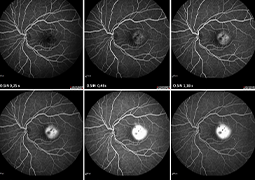
Case presentation: A 35-year-old female patient reported to our center in June 2024 with acute deterioration of vision in her left eye. Her medical history revealed that approximately 10 days prior to the examination, the patient had suffered a viral illness with exanthematous manifestations, diagnosed as parvovirus B19 infection, which was managed symptomatically. A fundoscopic examination revealed inflammatory changes in the macular region. As part of differential diagnostics, fluorescein angiography, OCT, perimetry, serological testing and lumbar puncture were performed. A molecular analysis of cerebrospinal fluid confirmed HSV-1 by PCR. Antiviral treatment with acyclovir (750 mg i.v. every 8 hours, followed by 400 mg orally twice daily for 6 weeks) led to clinical stabilization and improvement of central visual acuity to 20/25.

Conclusion: The presumed association between parvovirus B19 infection and subsequent HSV-1 reactivation indicates a potential immunomodulatory effect. This case underscores the importance of a multidisciplinary approach and prompt therapeutic intervention in the case of viral neuro-ophthalmic complications.

References

  1. Jabs DA, Nussenblatt RB, Rosenbaum JT. Standardization of uveitis nomenclature for reporting clinical data. Results of the First International Workshop. Am J Ophthalmol. 2005;140(3):509-516.
  2. Geetha R, Tripathy K. Chorioretinitis. StatPearls. 2024.
  3. Rathinam SR, Babu M. Algorithmic approach in the diagnosis of uveitis. Indian J Ophthalmol. 2013;61(6):255-262.
  4. Heissigerová J. Oftalmologie pro pregraduální a postgraduální přípravu. 2.aktualizované a doplňené vydání. Praha: Maxdorf; 2021. 395 p.
  5. Oshitari T, Kitahashi M, Mizuno S, et al. Werner syndrome with refractory cystoid macular edema and immunohistochemical analysis of WRN proteins in human retinas. BMC ophthalmology. 2014; 14:31.
  6. Stephens JD, Adam MK, Todorich B, et al. Optical Coherence Tomography Findings in Endogenous Fungal Chorioretinitis, Retinitis, and Endophthalmitis. Ophthalmic Surg Lasers Imaging Retina. 2017;48(11):894-901.
  7. Bonnet C, Brézin A. Uvéites, éléments d’orientation diagnostique [Uveitis: Diagnosis and work-up]. J Fr Ophtalmol. 2020;43(2):145-
  8. Grutzmacher RD, Henderson D, McDonald PJ, Coster DJ. Herpes simplex chorioretinitis in a healthy adult. Am J Ophthalmol. 1983;96(6):788-796.
  9. Tsan GL, Claiborne RT. Ocular syphilis. Clin Exp Optom. 2021;104(7):756-759.
  10. Michalová K, Říhová E, Havlíková M. Fansidar v léčbě toxoplazmózy [Fansidar in the treatment of toxoplasmosis]. Cesk Slov Oftalmol. 1996;52(3):173-178.
  11. Amos CS. The ocular manifestations of congenital infections produced by toxoplasma and cytomegalovirus. J Am Optom Assoc. 1977;48(4):532-538.
  12. Holland GN, Togni BI, Briones OC, Dawson CR. A microscopic study of herpes simplex virus retinopathy in mice. Invest Ophthalmol Vis Sci. 1987;28(7):1181-1190.
  13. Cunningham Jr ET, Downes KM, Chee S-P, Zierhut M. Cytomegalovirus Retinitis and Uveitis. Ocular Immunology and Inflammation. 2015;23(5):359-361.
  14. Roe T, Waddy S, Nikitas N. Multiple Organ Dysfunction Secondary to Herpes Simplex Virus -1 Reactivation After Treatment with Dexamethasone and Sarilumab for Covid-19 Disease. J Crit Care Med (Targu Mures). 2023;9(2):122-128.
  15. Jia X, Gong L, Huang G, Zhang W. Renlei xixiao bingdu B19 yu zishen mianyixing jibing bingyin xiangguan xing de zongshu [Review of correlation between human parvovirus B19 and autoimmune disease etiology]. Xi Bao Yu Fen Zi Mian Yi Xue Za Zhi–Chinese journal of cellular and molecular immunology. 2020;36(1):75-80. Chinese.
  16. Vigeant P, Ménard HA, Boire G. Chronic modulation of the autoimmune response following parvovirus B19 infection. J Rheumatol. 1994;21(6):1165-1167.
  17. von Poblotzki A, Gerdes C, Reischl U, Wolf H, Modrow S. Lymphoproliferative responses after infection with human parvovirus B19. J Virol. 1996;70(10):7327-7330.
  18. Young Neal S, Brown Kevin E. Parvovirus B19. New Eng J Med.350(6):586-597.
  19. Aniz HA, Kheir WJ, Young RC, Isom RF, Dubovy SR. Acute macular neuroretinopathy: a case report and review of the literature, 2002– 2012. Ophthalmic Surg Lasers Imaging Retina. 2015 Jan;46(1):114- 124.
  20. Fang L, Tian T, Zhuang S, et al. Acute macular neuroretinopathy after COVID-19 infection: clinical characteristics and associated factors. Ophthalmol Retina. 2023 Oct 27;S2468-6530(23)00565-1. doi:10.1016/j.oret.2023.10.015.
  21. Nicolo M, Rosa R, Musetti D, Musolino M, Traverso CE. Early swept-source optical coherence tomography angiography findings in unilateral acute idiopathic maculopathy. Ophthal Surg Lasers Imaging Retina. 2016 Feb;47(2):180-182.
  22. Qiu G, Hu Z, Li M, Liu S. Dan ce ji xing te fa xing huang ban bing [Unilateral acute idiopathic maculopathy]. Yan Ke Xue Bao [Eye Science]. 1998 Sep;14(3):182-186. Chinese.
  23. Lavezzo mm, Sakata VM, Morita C, et al. Vogt-Koyanagi-Harada disease: review of a rare autoimmune disease targeting antigens of melanocytes. Orphanet J Rare Dis. 2016 Mar 24;11:29. doi: 10.1186/s13023-016-0412-4.
  24. Tayal A, Daigavane S, Gupta N. Vogt-Koyanagi-Harada disease: a narrative review. Cureus. 2024 Apr 23;16(4):e58867. doi: 10.7759/cureus.58867.
  25. Kobayashi T, Sekar P, Meier J, Streit J. Acute retinal necrosis in a patient with remote severe herpes simplex encephalitis. BMJ Case Rep. 2019;12(5):e229137. doi: 10.1136/bcr-2018-229137
  26. Ye L, Ding X, Shen S, Wang J, Wu J, Chen Y. Fulminant bilateral acute retinal necrosis complicated with secondary herpes simplex type-1 viral encephalitis: a case report. Medicine (Baltimore). 2019;98(35):e17001. doi: 10.1097/MD.0000000000017001
  27. Erlich KS, Hauer L, Mills J. Effects of long-term acyclovir chemosuppression on serum IgG antibody to herpes simplex virus. J Med Virol. 1988;26(1):33-39. doi: 10.1002/jmv.1890260106
  28. Ljungman P, Wilczek H, Gahrton G, et al. Long-term acyclovir prophylaxis in bone marrow transplant recipients and lymphocyte proliferation responses to herpes virus antigens in vitro. Bone Marrow Transplant. 1986;1(2):185-192.
  29. van Velzen M, van de Vijver DAMC, van Loenen FB, Osterhaus ADME, Remeijer L, Verjans GMGM. Acyclovir prophylaxis predisposes to antiviral-resistant recurrent herpetic keratitis. J Infect Dis. 2013;208(8):1359-1365. doi: 10.1093/infdis/jit350