
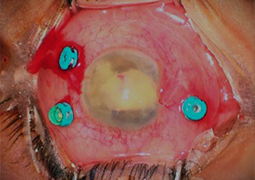

Aim: To evaluate the structural and functional outcomes of 25-gauge pars plana vitrectomy (PPV) in children with post-traumatic endophthalmitis.
Material and Methods: This retrospective study included 33 children (mean age: 6.5 ±2.6 years) with endophthalmitis following open globe injury who underwent 25G PPV. Preoperative parameters recorded were age, gender, time of onset, best-corrected visual acuity (BCVA), hypopyon, intraocular foreign body (IOFB), and retinal detachment (RD). Surgical details noted included timing of PPV, intraoperative findings, lens status, tamponade, and need for pars plana lensectomy (PPL). Vitreous samples were taken for microbiology. Minimum follow-up was 3 months.
Results: The mean interval between injury and onset of endophthalmitis was 4.72 ±3.75 days, and the mean time to PPV was 5.8 ±4.7 days. Hypopyon was present in 45.4%, IOFB in 12.1%, and RD in 6.1%. PPL was performed in 81% of eyes. Mean preoperative BCVA was 2.6 ±0.2 logMAR, improving significantly to 1.3 ±0.5 logMAR at 3 months (p < 0.05). Functional success (ambulatory vision > 3/60) was achieved in 33.3%. Anatomical success with retinal attachment was achieved in 72.7%, and endophthalmitis resolution in 90%. Retinal reintervention was required in 15%. Oil tamponade was used in 30% and gas in 9.1%. Microbiological positivity was seen in 39.3%, most commonly Gram-positive cocci.
Conclusion: Early 25G PPV in pediatric post-traumatic endophthalmitis offers favorable structural and functional outcomes. High rates of infection resolution and retinal attachment can be achieved despite severe presentation, particularly with timely vitrectomy, tailored tamponade, and lensectomy when indicated.