
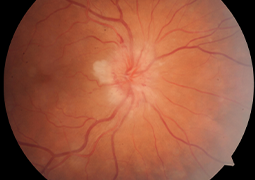


Aim: The aim of this study was to investigate the potential contribution of systemic inflammation to the pathogenesis of non-arteritic anterior ischemic optic neuropathy (NAION), to evaluate the diagnostic and potentially prognostic value of relatively novel inflammatory indices, and to assess their associations with visual function and structural optic nerve findings at presentation.
Materials and Methods: The medical records of 26 patients diagnosed with NAION and 28 age-, sex-, and comorbidity-matched controls were retrospectively reviewed. From complete blood count results obtained at diagnosis, platelet, neutrophil, lymphocyte, monocyte, and immature granulocyte counts were recorded, and the neutrophil-to-lymphocyte ratio (NLR), platelet-to-lymphocyte ratio (PLR), monocyte-to-lymphocyte ratio (MLR), pan-immune inflammation value (PIV), systemic immune-inflammation index (SII), and systemic inflammatory response index (SIRI) were calculated. Baseline best-corrected visual acuity (BCVA), retinal nerve fiber layer (RNFL) thicknesses, and visual field parameters were also evaluated.
Results: In the NAION group, platelet and neutrophil counts, as well as NLR, PLR, PIV, SII, and SIRI values, were significantly higher than in controls (p < 0.05). ROC analysis revealed that PIV (AUC = 0.830) and SII (AUC = 0.812) demonstrated the highest discriminatory power. PIV, SII, SIRI, and NLR showed significant negative correlations with mean, superior, and nasal RNFL thickness (p < 0.05), whereas PLR did not correlate (p > 0.05).
Conclusion: Elevated inflammatory markers, including NLR, PLR, PIV, SII, and SIRI, indicate the potential role of systemic inflammation in NAION pathogenesis. PIV and SII, in particular, demonstrated strong predictive potential for diagnosis and were associated with baseline optic nerve damage.