
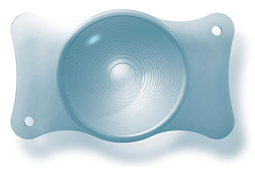

Aims: To compare trifocal versus monofocal intraocular lenses in terms of postoperative visual outcomes and patient satisfaction.
Material and Methods: In this prospective comparative study, 60 eyes of 46 patients with senile cataract were assigned in a 1:1 ratio to a trifocal IOL (AT LISA tri 839MP, Carl Zeiss Meditec) and a monofocal IOL (CT ASPHINA 203MP/603MP, Carl Zeiss Meditec). The following metrics were assessed before surgery at one, three, and six weeks after the procedure: uncorrected distance visual acuity (UDVA), best-corrected visual acuity (BCVA), uncorrected intermediate visual acuity (UIVA), uncorrected near visual acuity (UNVA), and contrast sensitivity. Using the Near Activity Visual Questionnaire (NAVQ), patient satisfaction as reported by patients was compared between both groups.
Results: Mean UDVA after 6 weeks postoperatively was comparable between the trifocal and monofocal group (p = 0.27). Compared to monofocal IOLs, trifocal IOLs had superior uncorrected intermediate visual acuity (UIVA: 0.10 ±0.05) and uncorrected near visual acuity (UNVA: 0.08 ±0.03). Contrast sensitivity, assessed using the Pelli-Robson chart, was similar between the two groups at 6 weeks (p=0.31). 93% of patients in the trifocal group reported being independent of their glasses for everyday tasks, indicating improved patient satisfaction, compared to 18% of patients in the monofocal cohort.
Conclusion: When compared to monofocal IOLs, trifocal IOL implantation after phacoemulsification provides superior distance, intermediate, and near visual acuity, along with high levels of spectacle independence and patient satisfaction, without sacrificing contrast sensitivity.